

2.3 Place & Transport
In this section, risks associated with your ministry’s location(s) and any travel are managed. Incuding:
- Sleeping arrangements
- Location information & risk assessment
- Access to amenities
- Site evacuation planning
- Ministry emergency plan
- Transport information
Before you begin, please read instructions below.
Ready to get started?
Complete the forms below:
Key Resources
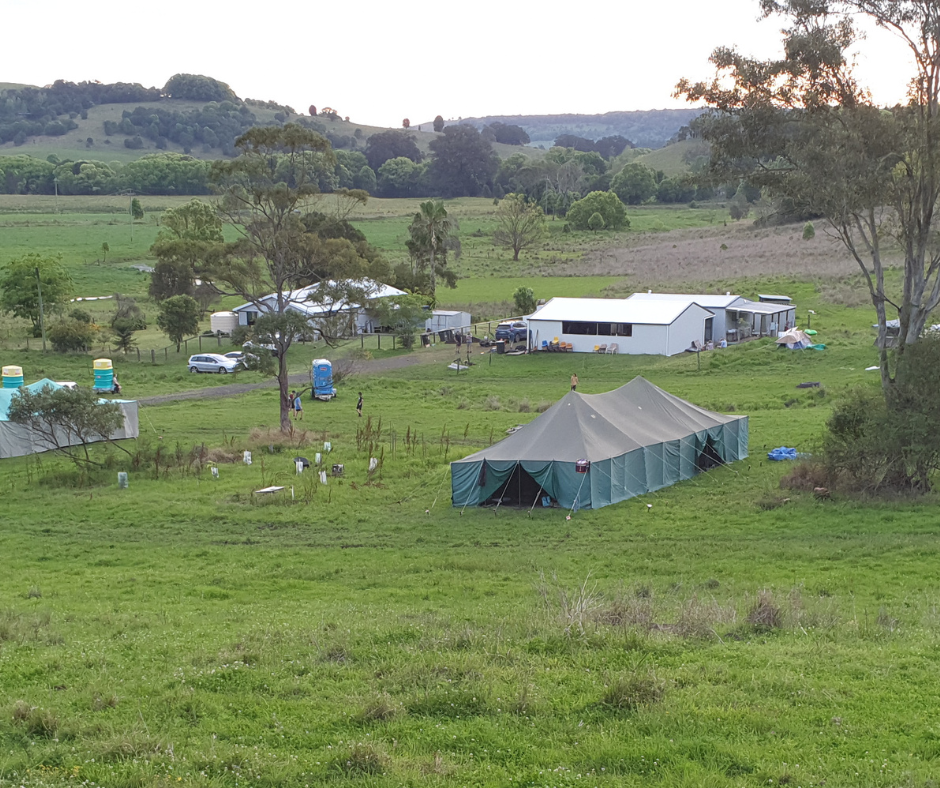
What is Needed in a Site Plan
A site plan or map is required for any overnight ministry and should clearly show:
- Where team members will be sleeping
- Where participants will be sleeping (if applicable)
- Location of toilets/showers
- Location of emergency assembly point(s)
- Location of other key buildings/spaces (eg. kitchen, equipment tent, program space)
- Location of key resources (eg. fire extinguisher, first aid kit)
If providing a commercial site plan, include annotations of where your team will be operating. For a caravan park, indicate which sites you will use and where your programmed activities will operate.
Evacuation Planning
In form 2.3 you will asked to provide 2 different types of evacuation plan.
-
Site Evacuation Plan(s) – 1 per location of ministry
- A site evacuation plan is your response plan to get everyone to safe place away from an immediate hazard (eg. kitchen fire).
- All commercial and community venues should have an existing evacuation plan. You will be required to upload this.
- If your location does not have a documented evacuation plan, you will need to create one, providing diagrams if required. This will need to include an evacuation route and assembly point.
-
Ministry Evacuation Plan – covers entire ministry
- A ministry evacuation plan is required in a major evacuation emergency when relocation is required.
- You will need to provide details of where you will relocate to and how you will travel to this location.
Transport
If team members will be supervising transport of participants at any time (ie. to and from site, travel to additional location) using vehicles, public transport or walking, then risks for this travel will need to be managed. Form 2.3 will request details of each travel route.
Each transportation method has a RAL code and risk plan. This risk plan should be modified to account for risks associated with your specific ministry context if required.
All drivers will need to complete a Road Driver Form, providing licence and insurance details of the vehicle they will be using.
SU NSW Risk Assessment Library
The SU NSW Risk Assessment Library (RAL) has been designed to reduce the workload for teams to create high quality Risk Plans for their ministry. All insured SU NSW activities have an approved Risk Plan and RAL code that has already been created that can be adopted as is or modified to suit the specific activity. Locations, location specific risks and transport methods also have a Risk Plan.
For more information and to access the RAL, please click below.
Risk Assessment Library
Saving your progress
RSGG forms do not save automatically. If you close the browser or your session times out, you may lose your answers.
Use the Save my progress & resume later button at the top of each page to save a link to your progress. This link will be emailed to you and can be used to return to the form at any time.
We recommend completing each form in one sitting where possible.
Look out for
this at the top
of the form
Need Help?
Please reach out if you have any questions or need assistance. The SU NSW Safe Ministry Team are here to help.
Find your way around RSGG
Not sure where to go? Visit the RSGG homepage for an overview, or jump straight to your current stage below.
Or jump to a specific stage: